
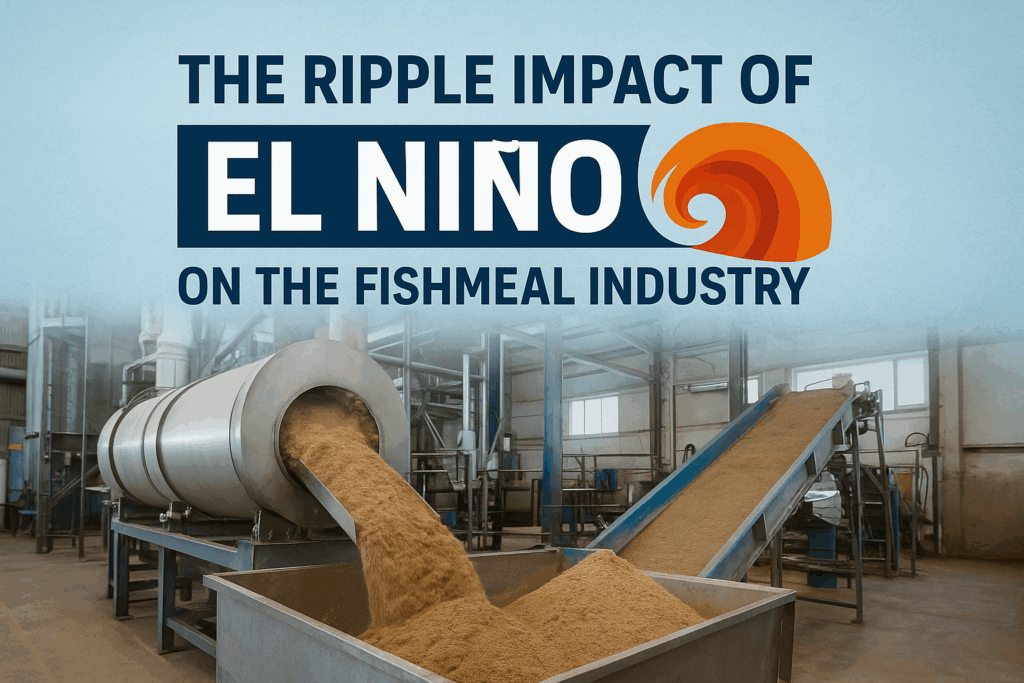
How climate phenomenon is pivotal to the Fishmeal industry
In the global aquaculture and livestock industries, fishmeal plays an essential and crucial role. It is obtained from nutrient-rich fish, fishmeal is a cornerstone of high-protein diets for farmed fish, pets, poultry, cattle and pigs. However, few outside the industry understand just how delicate this commodity is to weather patterns—especially the powerful El Niño phenomenon. The events of 2023 in Peru, the world’s leading fishmeal producer, are a clear reminder of how deeply climate impacts the entire fishmeal supply chain—from harvesting to production to worldwide distribution.
At Australian Fishmeal Company, a trusted manufacturer of fishmeal and bulk supplier we’ve witnessed firsthand how El Niño disrupts this delicate balance. Understanding this climate cycle and its implications on the ocean ecosystem is crucial for buyers, fishmeal manufacturers, and the broader food chain alike.
Effects on fish fertilisation turnover and ocean nutrients
During El Niño occurrences, warm top waters subdue uptrend, causing a dramatic decline in ocean nutrients. Consequently, the fertility of small oceanic fish species like anchovies falls notably. Without enough food to feed on, fish reproduction rates drop, growth slows, and populations start to dwindle.
This surge effect shakes the very foundation of the highly digestible fishmeal industry. The lesser fish means less of raw material, leading to reduced production volumes, increased prices, and irregularity in the global market. This in particular impacts the wholesale fishmeal suppliers and manufacturers, who must be able to adapt to unpredictable accessibility and rising costs while maintaining eco-friendly practices.
Weather: plays a major part in the Fishmeal Industry
In industries dependent on nature, weather is a central character and not just a backdrop.
In the fishmeal sector, rainfall patterns, ocean currents, and sea surface temperatures determine whether a season yields a plentiful catch or none at all. For fishmeal suppliers like us, forecasting and adapting to these weather-driven changes is essential.
For instance, Australian Fishmeal Company credits to real-time oceanographic data and historical trends to anticipate El Niño conditions and adjust our strategic sourcing accordingly. This allows us to maintain stable supply chains for high protein fishmeal, ensuring our clients receive consistent quantity and assured quality, even in turbulent years.
Imperishability and Environmental Management
Since long, the fishmeal industry has faced exploration over its environmental impact.
The modern advancements in traceability, quota-based fishing, and selective harvesting have significantly improved this sector’s eco-friendly profile. The Peruvian government, for example, regulates anchovy fishing through scientifically informed quotas that preserve breeding populations and prevent overfishing—practices that become even more critical during El Niño years.
At Australian Fishmeal Company, sustainability is embedded in our operations. We are committed to providing highly digestible fishmeal that supports animal health while respecting the balance of the marine ecosystem. By investing in processing technologies that maximise yield and minimise waste, we ensure that each catch delivers the highest nutritional value possible.
Furthermore, by sourcing from fisheries that adhere to Marine Stewardship Council (MSC) guidelines, we help promote responsible harvesting and long-term ecological health. The key is using every part of what we harvest efficiently and wisely, not just in catching more fish.
El Niño and the 2023 Peru crisis
El Niño is a periodic climate pattern that warms surface waters in the Pacific Ocean, rattling marine ecosystems and global weather. This phenomenon typically occurs every 2 to 7 years and can last from several months to, over a year, as El Niño typically peaks around December. El Niño can affect our weather remarkably. El Niño’s influence is not just meteorological. It directly impacts the marine ecosystem, particularly the upwelling process along the coasts of Peru and Ecuador. Upwelling is the rise of cold, nutrient-rich water from the deep ocean to the surface, which feeds plankton—the base of the marine food web. In Peru, it weakens the upwelling of cold, nutrient-rich water that supports anchovy populations—the key ingredient in high protein fishmeal. In 2023, El Niño caused sea temperatures to rise sharply, forcing Peru to cancel its main fishing season. With anchovies retreating to deeper waters, fish stocks dropped, production halted, and fishmeal prices surged. For the world’s top fishmeal supplier and manufacturer, the event exposed how climate remains a powerful force shaping the industry. Due to price escalation, contracts were delayed, and many fishmeal manufacturers had to source alternatives resulting in often less sustainable raw materials, or reduce output altogether.
Advancement of the industry
As we can see the climate changes are increasing and phenomenon like El Niño are expected to become more frequent and intense. This reality compels the fishmeal industry to rethink about the traditional practices and build resilient supply chains, and innovate for sustainability. We must anticipate and adapt as it’s no longer sufficient to react to changes in the environment.
Australian Fishmeal Company, as a leading fishmeal manufacturer and bulk supplier, is at the forefront of this transition. Our R&D efforts focus on improving the digestibility and protein content of our products, ensuring that animals require less feed to achieve optimal growth. This would lowers the costs for farmers as well reduce the strain on fish stocks and ecosystems.
A future built on effective protein origins
Our fishmeal is obtained from species that are lowest in the food chain and in abundance, such as anchovies, menhaden and herring. These fish reproduce rapidly and feed on plankton, making them some of the most sustainable protein sources on the planet. The fishmeal production has smaller environmental footprint than the land-based protein production.
Additionally, their fast growth translates into higher yields and reduced time to market—a critical advantage in today’s fast-paced agricultural economy. This efficiency helps reduce pressure on resources and supports a more sustainable food system for the future.
Final Thoughts
El Niño may be a natural phenomenon, but its consequences for the fishmeal industry are profound. From disrupting marine ecosystems to shaking global supply chains, the ripple effects are felt far and wide. Yet with the right strategies, foresight, and commitment to sustainability, the industry can not only weather these challenges but emerge stronger and more resilient.
At Australian Fishmeal Company, we are proud to be a trusted wholesale supplier and manufacturer of fishmeal that prioritises environmental responsibility, offering consistent, sustainable, innovative and highly digestible fishmeal for various feed applications. Whether it’s aquatic feed, pet feed, cattle feed, or swine feed, our high protein fishmeal helps animals grow healthier and faster while reducing feed conversion ratios and environmental impact.
Beside sourcing from fish species that are in abundance and are lowest in the food chain we contribute to a responsible and circular food system. Their fast growth translates into higher yields and reduced time to market. Thus making our fishmeal not only efficient but also a smart choice for sustainable farming and feed production. This priorities environmental responsibility, innovation, and consistent quality. By sourcing from abundant, fast-growing fish species and investing in efficient production methods, we help our partners thrive—no matter what the weather brings.
“Looking for a trusted partner in high-quality, sustainable fishmeal? Contact us at Australian Fishmeal Company to learn more about our offerings and how we can support your feed requirements with confidence and consistency.”
#Fishmeal Manufacturer
#Fishmeal Supplier
#El Niño & Fishmeal Industry
#Sustainable Fishmeal Production
#Aquaculture Feed Ingredients#Livestock Protein Source